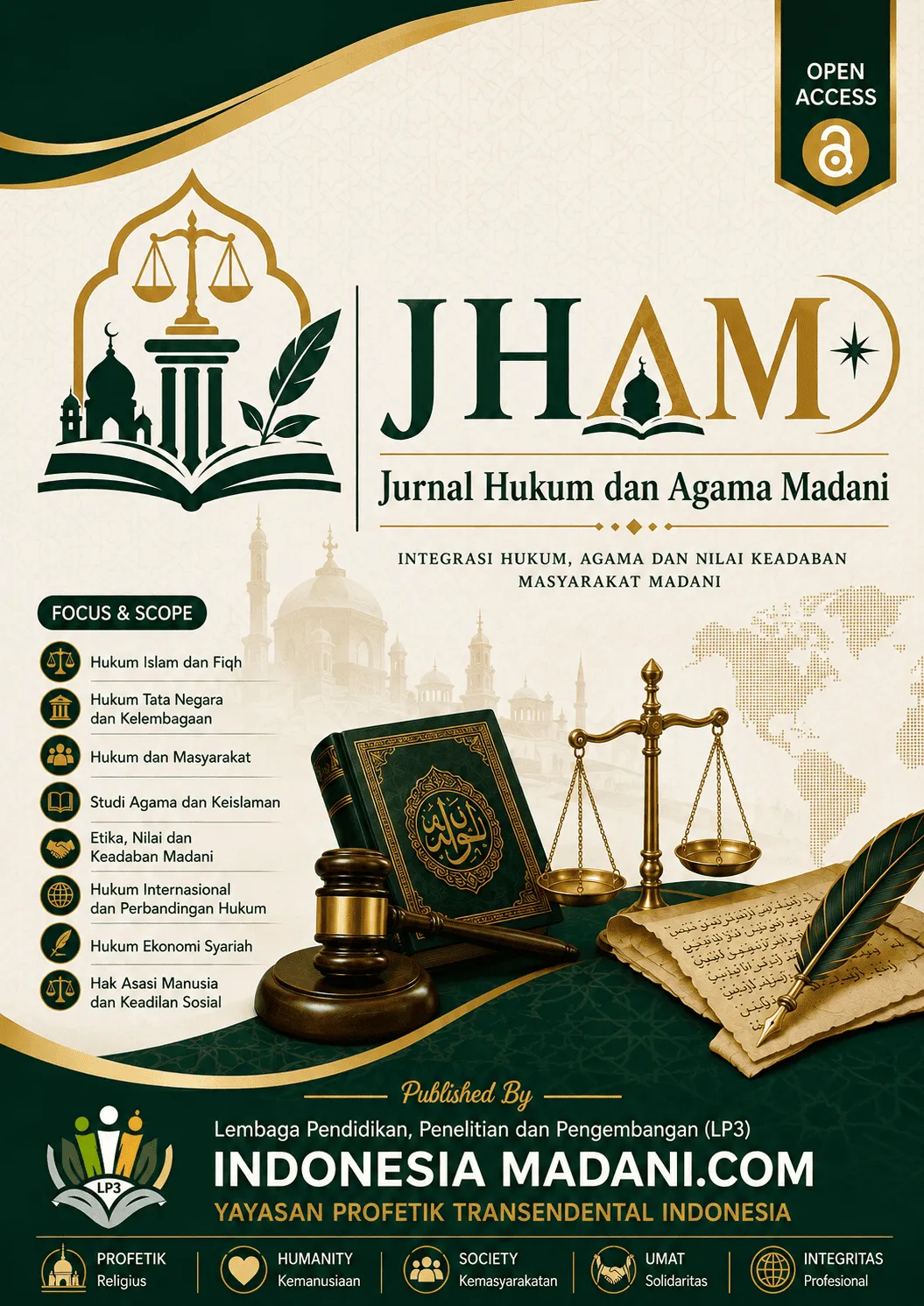
RELIGIOUS MODERATION AND THE CONSTRUCTION OF A CIVIL SOCIETY: AN ISLAMIC LEGAL AND HUMAN RIGHTS PERSPECTIVE
Abstrak
Religious diversity is an inherent characteristic of contemporary societies and constitutes both a social resource and a potential source of conflict. In pluralistic societies, religious differences may generate constructive social interaction when accompanied by tolerance, justice, mutual respect, and recognition of human dignity. Conversely, exclusivist attitudes, discrimination, intolerance, and religiously motivated violence may weaken social cohesion and undermine the development of a democratic civil society. This study aims to examine the relationship between religious moderation and the construction of civil society from Islamic legal and human rights perspectives through a qualitative library research approach. The study critically analyzes scholarly literature, Islamic legal sources, Qur'anic principles, maqāṣid al-sharīʿah, and human rights frameworks related to religious freedom, tolerance, equality, justice, and social coexistence. The findings indicate that religious moderation in Islam is grounded in principles of wasatiyyah, justice, balance, tolerance, mutual recognition, public benefit, and prevention of harm. These principles provide a normative foundation for constructing a civil society characterized by peaceful coexistence, social participation, equality, and respect for human dignity. From an Islamic legal perspective, religious moderation does not require abandoning religious identity but encourages the responsible expression of religious convictions within a pluralistic social order. The analysis also demonstrates significant convergence between Islamic legal principles and human rights values, particularly regarding human dignity, freedom of religion, equality, non-discrimination, and peaceful social participation. The study proposes an integrated framework in which religious moderation functions as a normative bridge between Islamic values and human rights in constructing a resilient and inclusive civil society. The study contributes conceptually by positioning religious moderation not merely as a strategy for preventing religious extremism but as an ethical and legal foundation for strengthening democratic citizenship and social cohesion.
Kata Kunci:
Naskah Lengkap (PDF)
Tersedia berkas publikasi resmi untuk dibaca atau diunduh.2
Dilihat
2
Diunduh
0
Disitasi
Informasi Artikel
Tidak ada pernyataan pendanaan yang dilaporkan.
Tidak ada konflik kepentingan yang dilaporkan.
- Diterima: 09 September 2026
- Direvisi: —
- Disetujui: 08 November 2026
- Diterbitkan: 09 November 2026
Cara Mensitasi
Rifqi Rohmatulloh. (2026). RELIGIOUS MODERATION AND THE CONSTRUCTION OF A CIVIL SOCIETY: AN ISLAMIC LEGAL AND HUMAN RIGHTS PERSPECTIVE. Jurnal Hukum dan Agama Madani (JHAM), 1(1).
Lisensi
Artikel ini dilisensikan di bawah Lisensi Creative Commons Attribution-ShareAlike 4.0 Internasional.